Last week, I was given an assignment to be able to spot current trends that people are following all over the metro. The task was to hang out at a place that is considered “hip” and “trendy” to be able to spot the few people in Manila who are fashion conscious. The task alone was daunting and intimidating for me because I wasn’t really comfortable going up to a random person and asking them if I could take their picture. Another obstacle that ran through my mind as the task was being given was the limited number of people in the Metro who were fashion conscious. True, people have been becoming more and more aware of what they wear and have been paying more attention to their looks. But in a place like Manila where people are uniformed in t-shirts, jeans and sneakers, finding trendy people would be a little more tedious as compared to finding people who express themselves with their style in fashion capitals around the world. Manila, after all, has never exactly been regarded as a fashion capital nor has it been very adventurous with regard to its fashion choices.
The following girls are among the few whom I found stylish and expressed their unique personality through the clothes they wear. I found that this task allowed me to kill two birds with one stone; I was able to do my assignment and, at the same time, get over my fear of approaching people. After a while, it became easier and easier to ask people if I could take their pictures because I was getting a hang of talking to random people.

This girl was so easy to spot because I found myself so enamored by her outfit. I was so drawn to the way she put things together, I felt like she had so much spunk and personality. I only realized that she was perfect for this project when I found myself looking from her top to her leggings to her shoes! She is seen here, wearing an acid wash top, a cropped vest, liquid leggings, gladiator shoes and a couple of bangles. I usually find it overkill when someone mixes more than two trends at the same time in one outfit. But overall, I liked the way she put her outfit together. My only critique, however, is for the pink bangles that she is seen wearing on her right arm. The outfit, for me, was a play between shades of blue and white and the pink bangles seemed a little out of place.
Among the articles of clothing that she has on, I decided to focus on the cropped vest. I found it to be the choice that was least obvious. (In fact, you only get to see it if you look closely!)
The vest has survived through history as a staple in the wardrobes of affluent men. The most powerful man in England, King Charles I, after all, introduced it in the 17th century. The vest was by the king as a form of defiance to the prevailing fashion of France at that time that entailed flamboyant and extravagant silhouettes. The simple lines of the vest were created to promote frugality among the English as compared to the ostentatious ways of the French Court. Ironically, however, due to the fact that the royalty and noblemen were wearing it, the symbol of defiance to extravagance became a symbol of status and wealth.

The symbol of the vest took another turn in the 1960’s when it was used as another way of defiance to the rigid ways of society. Teens and activists in the 60’s created the look of being a slob in order to protest the conservative and traditional ways that were imposed on them.
Although the trend of the cropped vest hasn’t been as rampant these days (I believe the cropped vest is at the Late Majority part of the trend cycle) as it was seen in 2006, the vest has become a constant item found in runway shows. The way it is presented, however, varies from each designer.

From the electric blue sequined vests of Givenchy to the long fur vests of Matthew Williamson, it is obvious that the vest is still in trend this season.


The second girl who I am doing a profile of is actually a friend of mine, Maika Cruz. Her name was the first name I thought of when the project was given since I knew I was going to see her the weekend after the task was given. I thought it was such a great opportunity to feature someone I knew and to be able to relate her personality to what I was going to write.
The moment I saw Maika at the party, I had to pat myself at the back because I figured that Maika was such a perfect choice. We attended a semi-formal party so it meant getting dressed and Maika didn’t disappoint. When I first saw her, I found her choice of combination so odd. She was wearing a brocade corset top with what I thought was a high-waist metallic skirt. Imagine my surprise when I learned from her that the outfit was actually a dress! She styled her outfit with a couple of strands of long pearl necklaces of different lengths and sizes. To complete her outfit, she wore patent leather booties (Although, it isn’t seen in the picture).

I approached Maika and asked her if I could take her picture, having told her beforehand about the assignment. She gleefully agreed and posed. I asked her why she chose to put those two fabrics together (I later learned that she created the dress herself). She said she wanted to go for a look at was tough (metallic fabric) and dainty (brocade) at the same time. She wanted to be able to create an edge by combining the two. I wouldn’t necessarily have put those two fabrics together since I feel like they seem to clash. The luster and shine of the metallic skirt seems to be fighting for attention with the seemingly delicate yet equally eye-catching brocade. The garment, however, looks so much better in person. I think that the flash made it seem like it was shiny all over. ☺ I liked her layering of pearls but I felt like the luster of the pearls also clashed with the effect that the brocade corset gives.
Amidst my confusion regarding the combination of fabrics, I found myself particularly drawn towards her strands of pearls. I found it appealing despite all the things that were going on around it. Maybe it was my love for pearls that attracted me and prompted me to use them as the focal point of her outfit.

Pearls have long been regarded as a symbol of purity, chastity and unblemished perfection. They were given great value when Italian merchants brought them to Europe from the East. During the 13th and 14th centuries, they were highly regarded by the nobles and royalty. They were used to adorn the garments of high-ranking officials and in government and society. It was said that in order for one to be fashionable, pearls were needed to be worn in abundance.
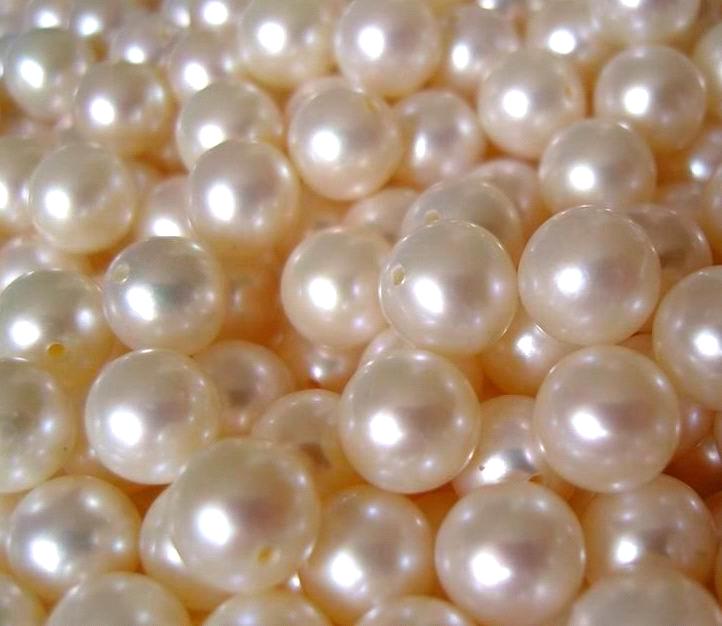
Pearls were valued so much that in 1916, Jacques Cartier bought his now-famous 5th Avenue store in New York in exchange for two pearl necklaces.

The long strands of pearls were popularized by Coco Chanel and later followed by notable women such as Jackie Kennedy.

As much as I feel like strands of pearls are a staple that should be in every woman’s wardrobe, the length of the necklaces that Maika is wearing in the picture seems to be in the late majority stage of the cycle as well.
Similar to the vest, the fashion leadership theory that is seen with the popularity of the pearls is the Trickle Down Theory. The pearls were, like the vests, seen as a symbol of power. There were even laws in Europe that dictated who could wear pearls and who couldn’t. Because of technology and innovation that people had, processes have been developed in order to create and manufacture pearls that are more accessible to the masses such as cultured pearls. This proves the Trickle Down Theory of the pearl necklace from the elite of Europe to the masses all over the world.
-- Stephanie Oca

No comments:
Post a Comment